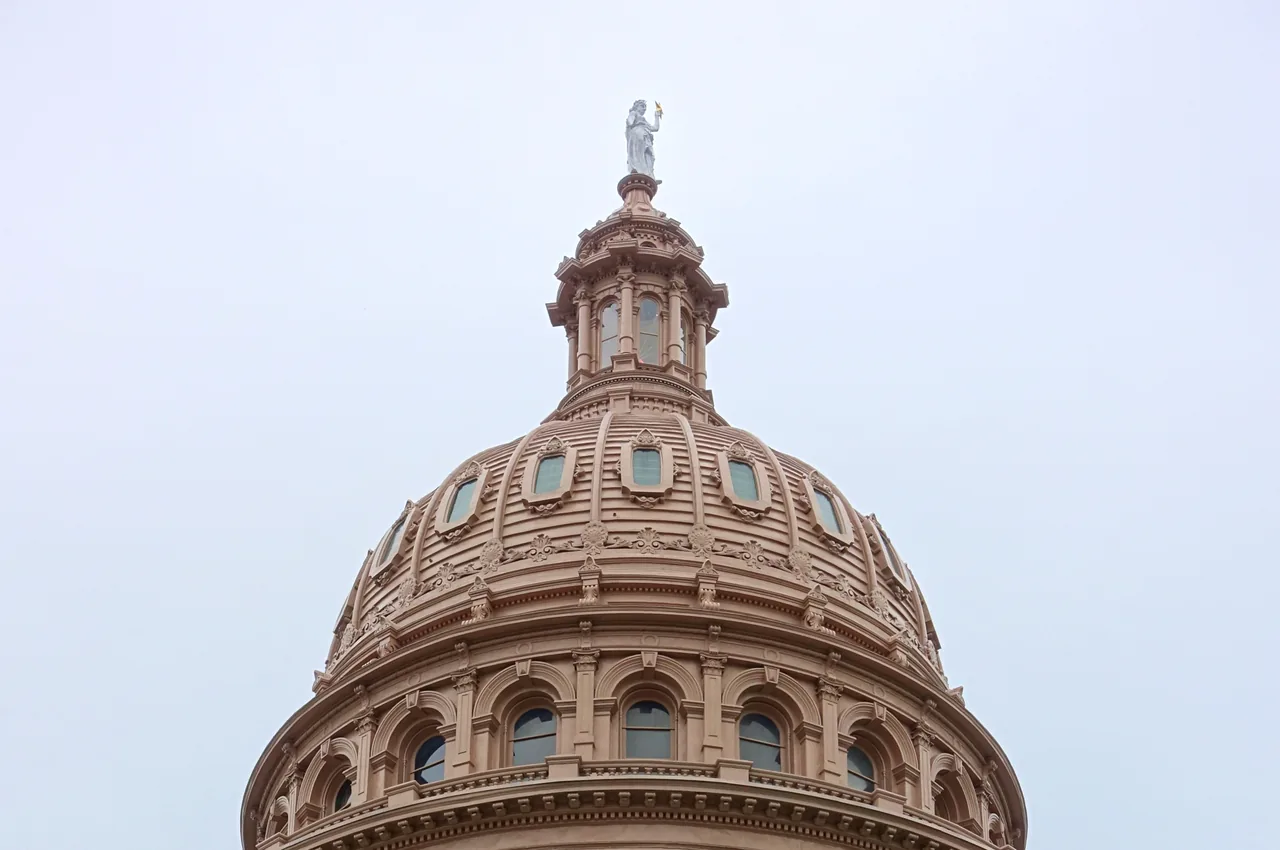
Dallas is home base.
The dates we read can sit anywhere in Texas, and the person who reads them works from Dallas, on a video call or a phone call, with the company file shared and the close landing in the same month. We are all Texans. An owner in El Paso, or one whose only tie to Dallas is the practice on the far end of the call, gets that same close. We do not pretend we keep a room in that owner's city, and we do not pretend we have stood in the hall.
The worry that belongs on this page is a letter that treats a couple's money as the planner's. A refundable hold can clear the bank in March and still be theirs in June. If the file called it a fee on the day it arrived, a franchise report and a sales tax return will both inherit the mistake. The other pages on this site walk the contract test for any state. This page is that same test pointed at a Texas letter.
What the sales tax return is asked to do
On a planner file the state piece of sales tax is 6.25 percent, a city or other local body may add as much as 2 percent, and the stacked rate stops at 8.25 percent, which inside Dallas is the state 6.25 plus 1 percent for the city plus 1 percent for DART, while Dallas County leaves that local percent with DART and does not pile on a county sales tax.
A planner who files that return monthly sends it on the 20th of the next month, a quarterly filer uses the 20th of April, July, October, and January, a yearly filer uses the 20th of January, and any payment over $1,000,000 has to be started in TEXNET by 8 in the evening, Central time, on the business day before the money is due.
Flowers, rentals, and paper goods are a different line from the work of running the day. One of those lines can sit on the Comptroller's taxable list while the other does not, and the list is the one for the year being filed. This page will not guess the answer from the word wedding. Split the items so the return can follow the list. One item called the wedding hides whichever piece the list wants.
A room tax the hotel already sent
When a planner's date includes a room, the state hotel occupancy tax is 6 percent of what that room costs, it reaches a room priced at $15 or more a day, a local hotel tax can reach a room priced at $2 or more a day, and the reports are due on the 20th, monthly or quarterly when the filer qualifies, under Tax Code chapter 156 for the state, chapter 351 for a city, and chapter 352 for a county.
The city of Dallas lays a 9 percent charge on net room revenue for hotel occupancy, and the person who actually runs the room is the one who registers with the city and collects it, so a planner who only reserved the block should not leave that collected amount sitting in sales tax payable. In a month that is still open, take that room-tax memo out of the payable so the payable shows only tax the planner owes. A filed year stays as it was filed until someone decides, with the return in hand, that an amendment is the move.
The franchise report and the hold
For the franchise reports due in 2026 and 2027, the Comptroller's no-tax-due line on a planner's revenue is $2,650,000, retail and wholesale pay 0.375 percent, everyone else pays 0.75 percent, compensation subtracted is capped at $480,000 a person, and an EZ path stays open at $20 million of total revenue or less using 0.331 percent, with the report due on May 15 or on the next business day when May 15 is a Saturday, a Sunday, or a holiday. Publication 98-806 is the Comptroller's plain-language book for this tax, and the rates in this paragraph are the ones that book and the franchise page print for those two report years.
Margin on a wedding file can start from 70 percent of total revenue, from total revenue after the goods that were sold, from total revenue after pay, or from total revenue after $1,000,000, and the kinder of those four depends on the year in front of you. A planner whose work is mostly coordination usually belongs in the 0.75 percent group, the one the form calls other than retail or wholesale. A shop that mostly resells goods may belong in retail or wholesale at 0.375 percent. The word wedding does not pick the group. The facts of what was sold do.
File that franchise report late and the bill includes $50 even when the tax itself calculates to zero, money that shows up during the first 30 days after the due date adds 5 percent, money after that adds 10 percent, and interest on these franchise dollars begins on day 61 at the 2026 yearly rate of 7.75 percent on the Comptroller interest page, prime plus one, which the franchise instructions cite instead of repeating the percent.
Here is where the couple's hold meets that report. Total revenue on the franchise report is drawn from the revenue amounts on the federal return, minus exclusions the statute allows. If a refundable hold was posted as a fee, those federal amounts grew, and the margin grew with them. Money the couple can still take back is not revenue just because the bank cleared. Read the cancellation clause before the report is filled in. When the clause says the money goes back, keep it off the fee, and keep it out of the revenue the margin is built on.
No wage tax, and the federal return still reads the year
Texas does not tax personal income. Skipping a wage tax leaves the franchise report, the sales tax return, and a room operator's hotel tax right where they were. What the federal return is able to read, once the open year is trustworthy, is a stack of closed months with one customer on each date, a hold that follows the contract, and vendor totals that exist before January. The question of whose money the deposit was does not go away because the state skipped a tax on wages.
Where a Dallas owner can take a question
The Comptroller runs two walk-in field offices that Dallas owners use, Dallas Northwest and Dallas Southwest. They are open Monday and Wednesday from 9 to 4, and Friday from 8 to noon. An owner whose city has no walk-in office uses one of those two rooms, or the Virtual Field Office. This page prints no street address.
Business personal property on a planner's kit in Dallas County is rendered to the Dallas Central Appraisal District. The rendition for 2026 is due April 15. Tents, tables, and the rest of the kit the district expects belong on that form. The books we close are a different stack from that rendition, and the due date is the district's date.
Four Dallas places, and the file each one needs
Fair Park is just east of downtown, and a lot of its buildings went up for the Texas Centennial Exposition in 1936. A couple can book one of those rooms for a date. The deposit taken for that date stays the couple's until the contract says the fee has been earned. The customer in the file is the date. How old the hall is does not rename the customer.
A planner working the State Fair of Texas, which has been put on in every year since 1886 aside from the two world wars and aside from 2020, meets a fair that usually opens on the last Friday of September and stays 24 days at Fair Park, and those days will share one customer row unless each date is named before the monthly close, because a refund on one day otherwise changes the look of the other twenty-three.
Since 1952 people have treated Big Tex, the 55-foot figure standing in the middle of those fairgrounds, as the place to meet, and the money from that meeting still has to land on a customer, which is the date rather than the figure, with the hold staying a hold for as long as the couple can take the money back.
The downtown deck called Klyde Warren Park lies over Woodall Rodgers Freeway and the public can use it from 6 in the morning until 11 at night, so a reception there can still be underway after the park's posted hours, while the fee posts only when the contract says the work is done and that single date keeps its own customer the way any other hall's date does.
What we will do with a Texas file
The work follows the shape of the rest of this site, aimed at these Texas reports. Each open date gets a customer. A refundable hold stays apart from the fee. People you pay get a running total before the January forms. When a coordinator should be an employee, payroll is set up on a provider you operate after we stand it up. Paychecks are not run from this practice.
We can prepare the return once the open year is one you trust. We can talk through the management choice, including what the open holds do to cash and to the next estimate. What leaves this practice, when you want paper, is a set of statements with no assurance report on them, and reports of that kind are not signed here. If a lender or a buyer wants one, the first call says so, and the introduction goes to a firm that can sign it.
Nothing on this page moves a number inside a year that is already filed. Name that year, then the work stays in the open months. The deposit rule in any state is on where a hold posts. The customer rule is on one customer per date. The person on the call is on who reads the file.
Which date the letter is about
Name the date and whether the couple can still take the money back.
You will be talking to the Steven Palmieri practice.